Loading...
The search for fulfillment is universal. The Japanese concept of Ikigai (ee-kee-guy), or "a reason for being," provides a framework for mapping this quest. It suggests that true fulfillment lies at the intersection of four key elements. For a writer, Ikigai is not just a self-help concept; it's a blueprint for a character's entire motivation. A character's relationship with these four pillars defines their satisfaction, their struggles, and their ultimate purpose in your story.
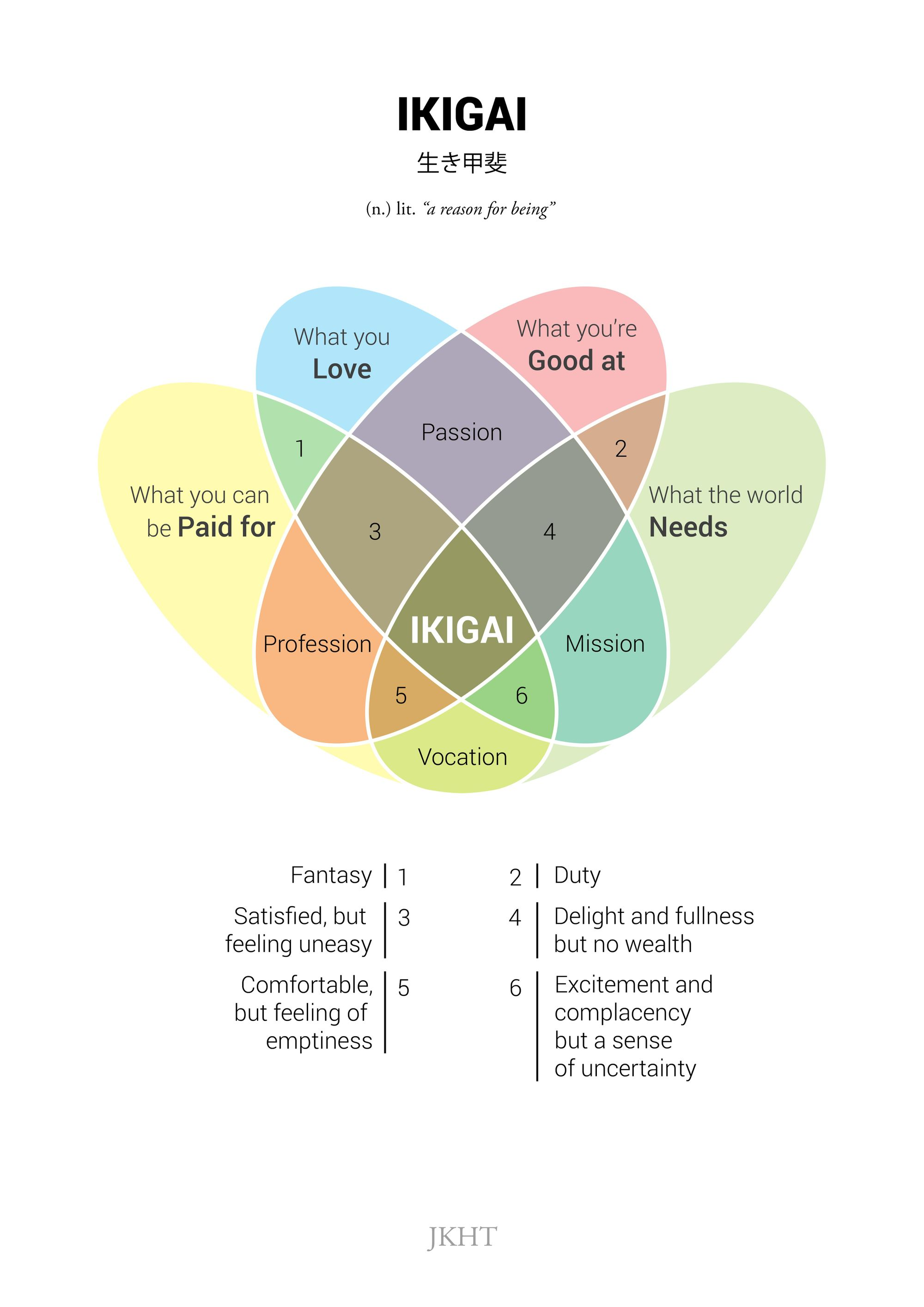
The Four Pillars
What You Love
This pillar represents a character's passions and interests. What do they do in their free time? What topics animate them? This is the source of their intrinsic joy.
What You Are Good At
This pillar is about a character's natural talents and developed skills. What comes easily to them? Where do they excel? This is the source of their competence and confidence.
What the World Needs
This pillar concerns a character's impact. What problems do they feel compelled to solve? How can they contribute to something larger than themselves? This is the source of their meaning.
What You Can Be Paid For
This pillar represents a character's marketable skills. How do they survive? What can they offer in exchange for financial stability? This is the source of their security.
IKIGAI
The center where all four pillars align. A state of total fulfillment where a character is doing what they love, what they're good at, what the world needs, and what they can be paid for. This is their "reason for being."
Read the rest for free
Enter your email and we'll send you a sign-in link. It unlocks this page and all 78 free tools. No password.
The search for fulfillment is universal. The Japanese concept of Ikigai (ee-kee-guy), or "a reason for being," provides a framework for mapping this quest. It suggests that true fulfillment lies at the intersection of four key elements. For a writer, Ikigai is not just a self-help concept; it's a blueprint for a character's entire motivation. A character's relationship with these four pillars defines their satisfaction, their struggles, and their ultimate purpose in your story.
The Four Pillars
What You Love
This pillar represents a character's passions and interests. What do they do in their free time? What topics animate them? This is the source of their intrinsic joy.
What You Are Good At
This pillar is about a character's natural talents and developed skills. What comes easily to them? Where do they excel? This is the source of their competence and confidence.
What the World Needs
This pillar concerns a character's impact. What problems do they feel compelled to solve? How can they contribute to something larger than themselves? This is the source of their meaning.
What You Can Be Paid For
This pillar represents a character's marketable skills. How do they survive? What can they offer in exchange for financial stability? This is the source of their security.
IKIGAI
The center where all four pillars align. A state of total fulfillment where a character is doing what they love, what they're good at, what the world needs, and what they can be paid for. This is their "reason for being."
Plotting a Character's Search for Ikigai
The Intersections: Sources of Conflict and Motivation
A character's entire arc can be defined by which pillars they have and which they lack. The gaps are where your story lives.
- Passion (Love + Good At): The character is a master of their craft but struggles to make a living or find meaning.
Archetype: The Starving Artist, The Brilliant but Unknown Scientist.
Conflict: "I'm amazing at this, and I love it, but I feel useless and can't pay my rent." - Mission (Love + World Needs): The character is a passionate activist for a cause they believe in, but they lack the skills to be effective and are constantly broke.
Archetype: The Well-Meaning but Incompetent Activist.
Conflict: "My heart is in the right place, but I feel like I'm not making a real difference." - Vocation (Good At + World Needs): The character is a skilled public defender or a doctor in a warzone, doing important work they excel at, but they feel emotionally drained and unfulfilled.
Archetype: The Burnt-Out Hero.
Conflict: "I'm good at this, and it's important, but it's destroying me. I don't love it anymore." - Profession (Good At + Paid For): The character has a stable, high-paying job they are competent at, but they feel it's meaningless and don't enjoy it.
Archetype: The Corporate Drone in a Golden Cage.
Conflict: "I have everything I'm supposed to want, so why do I feel so empty?"
The Quest for Ikigai
A satisfying character arc often involves a journey to find the missing pillar(s) and align all four, achieving Ikigai.
- The Corporate Drone (Profession) quits their job to join a non-profit (adding What the World Needs), discovers a hidden passion for the work (adding What you Love), and finally finds their Ikigai.
- The Starving Artist (Passion) is forced by circumstances to use their unique artistic skills to solve a real-world problem (adding What the World Needs), and in doing so, finds they can finally get paid for their talent (adding What you can be Paid For).
Related Resources
Character Values Wheel
A values mapping system with 6 rings built on progressive derivation: from core axes to 24...
PremiumCharacter Arc Blueprint
A 5-stage model for mapping character transformation, with diagnostic checklists for each stage and...
Premium4 Styles of Self-Motivation
Four motivation styles based on Gretchen Rubin's Four Tendencies: how characters respond to internal...